
Drain Camera Inspection Montreal: What It Reveals About Your Pipes
Quick Answer
A drain camera inspection in Montreal costs $150 – $500 for a standard residential inspection. The plumber feeds a waterproof HD camera through your pipes to reveal exactly what is happening inside: tree root intrusion, cracks, corrosion, bellied sections, blockages, and collapsed pipe. The inspection takes 30 to 60 minutes and replaces thousands of dollars in guesswork with clear video evidence.
A camera inspection is the single most cost-effective diagnostic tool in plumbing. It turns invisible problems into visible answers.
Your drain and sewer lines run hidden beneath your floors, through your walls, and underground across your property. When something goes wrong, you cannot see what is causing the problem. Is it tree roots? A collapsed section? Grease buildup? A broken joint from decades of freeze-thaw cycles? Without a drain camera inspection, your plumber is essentially guessing, and guessing leads to unnecessary repairs, missed problems, and wasted money.
A camera plumbing inspection eliminates that guesswork entirely. A high-definition waterproof camera on a flexible cable travels through your pipes while transmitting real-time video to a monitor above ground. Your plumber sees exactly what is inside: the pipe material, its condition, every crack, root, blockage, and weak point. This guide explains everything Montreal homeowners need to know about pipe camera inspections, including what the camera reveals, what it costs, and when you need one.
What a Drain Camera Inspection Actually Reveals
A drain camera inspection is not just looking for clogs. The camera reveals the full picture of your pipe health. Here are the most common findings in Montreal homes:
Tree Root Intrusion
Montreal’s mature trees (especially silver maples and elms) send roots through hairline cracks in clay and cast iron pipes. The camera shows exactly where roots have entered and how far they have spread. This is the #1 finding in homes built before 1970.
Cracks and Fractures
Montreal’s freeze-thaw cycles (over 100 per year) stress underground pipes relentlessly. The camera reveals hairline cracks, longitudinal splits, and star fractures that are invisible from the surface but leaking sewage into the surrounding soil.
Pipe Corrosion and Scale
Cast iron drain pipes (common in Montreal homes 1930s-1970s) corrode from the inside out. The camera shows the severity: light surface rust, heavy tuberculation (buildup that restricts flow), or full wall deterioration where the pipe is close to failure.
Bellied or Sagging Sections
When soil settles unevenly (extremely common in Montreal’s clay-heavy ground), a section of pipe sags and creates a low point where water, waste, and sediment collect. The camera shows the belly clearly, and the plumber can pinpoint its exact location.
Offset Joints
Where two pipe sections meet, ground movement can push them out of alignment. The camera shows the gap, offset direction, and how much flow is restricted. Offset joints catch debris and create recurring blockages that drain cleaning only temporarily fixes.
Collapsed Pipe
The most serious finding. The camera shows where the pipe has caved in completely, blocking all flow. Older clay and Orangeburg (tar paper) pipes are most vulnerable. A collapse requires excavation or trenchless pipe lining to fix.
Montreal-Specific Finding: Many homes built in the 1950s-1970s in neighbourhoods like Ahuntsic, Saint-Laurent, LaSalle, and Pierrefonds have Orangeburg pipes (bituminized fibre pipes). These were expected to last 50 years and are now well past their lifespan. The camera typically shows them deformed, crushed, or delaminating. If your camera plumbing inspection reveals Orangeburg, full replacement is the only option.
How a Camera Plumbing Inspection Works (Step by Step)
Understanding the process helps you know what to expect when your plumber arrives. Here is what happens during professional camera inspection services:
Access Point Identification
The plumber locates the best access point: a cleanout (an above-ground pipe access), floor drain, or fixture drain. If your home lacks a cleanout, the plumber may remove a toilet to use the closet flange as an entry point (adds $50 – $150 for removal and reinstallation).
Camera Insertion
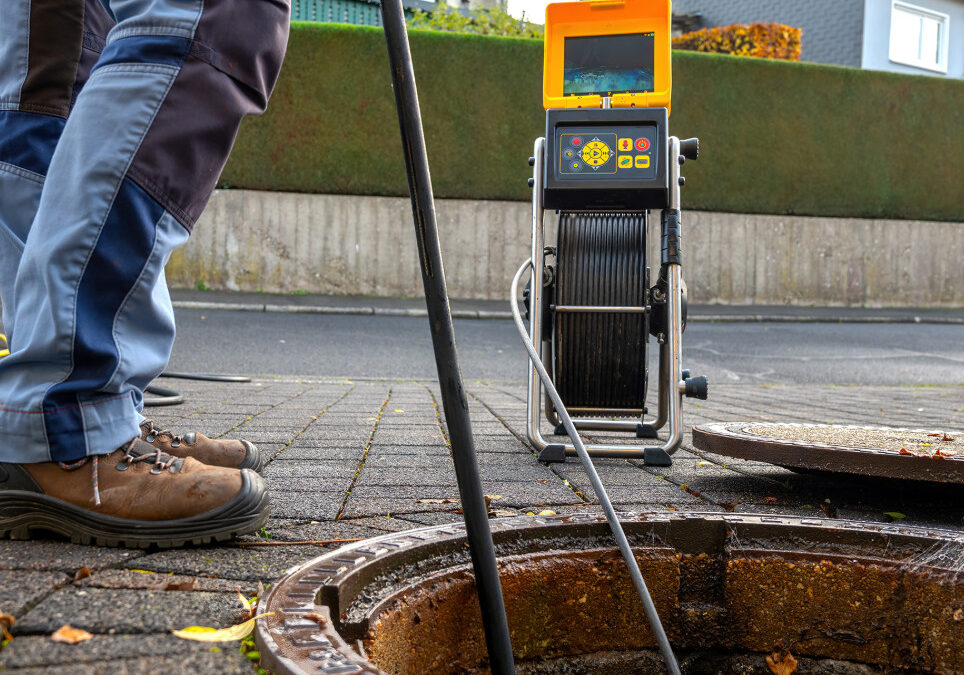
A waterproof HD camera (typically self-levelling) is attached to a flexible push rod and fed into the pipe. The camera has built-in LED lighting and transmits live video to a portable monitor. Professional cameras can inspect pipes from 2 inches to 12 inches in diameter and travel 50 to 200+ feet.
Real-Time Diagnosis
As the camera travels through the pipe, the plumber identifies the pipe material (cast iron, clay, PVC, ABS, Orangeburg), its condition, and any defects. The camera records video and captures still images at problem areas. You watch the live feed alongside the plumber so you can see exactly what they see.
Locator Tracking
The camera has a built-in radio transmitter (sonde). Above ground, the plumber uses a locator to pinpoint the camera’s exact position and depth. This tells you precisely where a problem is located: under the driveway, beneath the basement floor, or in the yard. Exact location data is essential for targeted repairs and avoids unnecessary excavation.
Report and Recommendations
After the inspection, the plumber provides a detailed report with video footage, still images, a written assessment of pipe condition, and recommended next steps. You receive the video file so you can share it with contractors, home inspectors, or insurance providers. The report becomes a baseline for future inspections.
How Much Does a Drain Camera Inspection Cost in Montreal?
Here is what Montreal homeowners pay for drain camera inspection services in 2026:
The math that matters: A $150 – $500 camera inspection can prevent $2,000 – $15,000+ in unnecessary excavation, misdiagnosed repairs, or emergency sewer backups. It is the cheapest insurance policy in plumbing. If you are dealing with recurring drain clogs or are buying a home built before 1980, a camera inspection is not optional; it is essential.
See Inside Your Pipes Before Problems Get Worse
Licensed CMMTQ plumbers – HD camera equipment – Same-week appointments
When Do You Need a Drain Camera Inspection?
Not every plumbing issue needs a camera. But these situations make a pipe video inspection essential rather than optional:
Recurring drain clogs: If the same drain keeps blocking after cleaning, the camera reveals whether the underlying cause is roots, a belly, offset joints, or a structural problem that snaking cannot fix.
Before buying a home: A pre-purchase camera plumbing inspection can save you $10,000 – $30,000 in surprise sewer repairs. Montreal homes built before 1980 often have clay, cast iron, or Orangeburg pipes approaching or past their expected lifespan. This is especially critical in the Plateau, Rosemont, Villeray, NDG, and Verdun where housing stock is oldest.
Sewage smell in the basement: A persistent sewer odour could mean a cracked pipe, dried P-trap, or broken sewer connection. The camera confirms which issue it is before any walls or floors are opened.
Slow drains throughout the house: When multiple fixtures drain slowly, the problem is usually in the main line, not individual drains. The camera pinpoints the exact location and nature of the obstruction.
Before or after basement renovation: If you are finishing your basement or adding a bathroom, inspect the existing drain system first. Discovering a cracked main drain after installing new flooring is a costly nightmare.
After a sewer backup or flood: A camera inspection after an emergency plumber visit confirms whether the backup was a one-time blockage or a symptom of structural pipe failure that will recur.
Routine maintenance (every 2 – 3 years): For homes with mature trees nearby or pipes older than 30 years, periodic camera inspection services catch developing problems before they become emergencies. Think of it as a health check for your plumbing.
Montreal Pipe Types and What the Camera Finds
Montreal’s housing stock spans over a century. The type of pipe in your home determines what problems the camera is most likely to find:
If your camera plumbing inspection reveals cast iron or clay pipes nearing the end of their lifespan, your plumber may recommend trenchless pipe lining (cured-in-place pipe, or CIPP) as a less invasive repair option compared to full excavation. For leaking pipes that have not yet collapsed, lining can extend pipe life by 50+ years at roughly half the cost of excavation and replacement.
Camera Inspection vs. Guesswork: Why It Saves You Money
Without a camera, plumbing diagnosis relies on symptoms, experience, and educated guessing. Here is how the two approaches compare:
Without Camera
Plumber snakes the drain, clears the immediate blockage. Problem returns in 3 – 6 months because the root cause (tree roots, belly, cracked pipe) was never identified. You pay for repeated service calls.
Typical cost over 2 years: $800 – $2,500+
With Camera
Plumber inspects first, identifies the root cause, and recommends targeted repair. Problem is solved once. You have video documentation for warranty and insurance purposes.
Typical cost: $150 – $500 inspection + one-time repair
The inspection also protects you from unnecessary upselling. Some contractors recommend expensive sewer line replacement based on symptoms alone. A professional camera inspection provides objective video evidence of whether the pipe actually needs replacement or if a simpler repair will suffice. If you want a second opinion, the video file can be shared with any other licensed plumber. Combined with regular plumbing maintenance, camera inspections help you plan and budget for repairs before they become emergencies.
What to Look for in Camera Inspection Services
Not all camera inspection services are created equal. When booking your inspection in Montreal, verify these points:
CMMTQ-licensed plumber: In Quebec, drain inspection that leads to repair recommendations must be performed by a CMMTQ-licensed plumber. The Regie du batiment du Quebec (RBQ) oversees construction licensing in the province, and all plumbing work must comply with the Quebec Construction Code. A licensed plumber can both diagnose and fix the problem. An unlicensed inspector can only show you the video; they cannot legally perform any plumbing work.
HD camera with locator: Insist on a service that includes a sonde locator, not just the camera. Without a locator, you can see the problem but cannot pinpoint where it is. The locator tells you the exact depth and position underground, which is critical for repair planning.
Video recording provided: You should receive a copy of the full inspection video (USB or digital file). This is your documentation for insurance claims, real estate transactions, and future reference. Any reputable service provides this.
Written report: Beyond video, ask for a written report noting pipe material, condition, specific defects found (with timestamps in the video), and recommended actions with estimated costs.
No pressure to repair on the spot: A professional inspection service gives you the findings and lets you decide. Be cautious of companies that offer free inspections but then pressure you into immediate, expensive repairs. The inspection should stand on its own as a diagnostic service. Plumbing Montreal provides transparent inspection reports with no obligation to proceed with repairs through us.
Drain Camera Inspection FAQ
How much does a drain camera inspection cost in Montreal?
A standard residential pipe camera inspection costs $150 – $350 in Montreal. A comprehensive inspection with locator mapping and written report runs $300 – $500. If combined with drain cleaning, expect $300 – $600 total.
How long does a camera plumbing inspection take?
A standard inspection takes 30 to 60 minutes. If multiple drain lines need to be inspected (main sewer, kitchen, bathroom, laundry), allow up to 90 minutes. The plumber shows you the live video during the process and reviews findings afterward.
Should I get a camera inspection before buying a house in Montreal?
Absolutely. A pre-purchase pipe inspection is one of the smartest investments you can make when buying a Montreal home, especially those built before 1980. It reveals hidden pipe problems that a standard home inspection cannot detect. The $200 – $400 cost can save you from inheriting a $10,000 – $30,000 sewer replacement. Many real estate lawyers in Montreal now recommend it as standard due diligence.
Can a drain camera find a water leak?
A drain camera inspects the inside of drain and sewer lines (waste water leaving your home). It can identify cracks, holes, and breaks in drain pipes that cause leaks. However, it does not inspect pressurised supply lines (water coming in). For supply line leaks, a separate leak detection service using acoustic or thermal methods is used.
Is a camera pipe inspection worth it for a newer home?
Yes, but for different reasons. Newer homes (built after 2000) typically have PVC or ABS drains that are less prone to root intrusion and corrosion. However, a pipe camera can still reveal construction defects, improper slope, bellying from soil settlement, and joint separation. It is also useful to establish a baseline for future comparison.
What is the difference between a drain camera and a sewer scope?
They are essentially the same thing. A sewer scope is the term often used during real estate transactions, while camera pipe inspection is the broader term covering any pipe inspection with a camera. Both use the same HD push-camera technology. The scope of work may differ: a sewer scope typically focuses on the main lateral from the house to the city connection, while a drain inspection may cover interior branch lines as well.
Can I do a DIY pipe camera inspection?
Consumer-grade snake cameras ($30 – $200) exist, but they lack the resolution, lighting, distance, and locator capability of professional equipment. They can peer into a drain a few feet, but they cannot travel 50 to 200+ feet through your sewer line. More importantly, interpreting what you see on camera requires experience. A professional plumber knows the difference between a minor deposit and a critical defect. For anything beyond a quick peek at a nearby clog, hire a professional.
How often should I get a drain camera inspection?
For homes with pipes older than 30 years or mature trees within 10 metres of the sewer line, inspect every 2 to 3 years. For newer homes with PVC or ABS pipes, every 5 years is sufficient unless you notice problems. Always inspect before and after major plumbing work, water heater replacements that disturb nearby drain connections, or basement renovations.
Does insurance cover camera pipe inspections?
Standard home insurance does not typically cover the cost of the inspection itself. However, if the inspection is performed as part of diagnosing a covered claim (such as a sewer backup that caused interior water damage), the inspection cost may be included. The video report from a camera inspection is valuable evidence when filing insurance claims for pipe-related damage.
Where can I find camera inspection services near me in Montreal?
Plumbing Montreal provides professional camera inspection services across all boroughs, including Downtown, West Island, East End, Laval, and South Shore. Our CMMTQ-licensed plumbers use HD cameras with sonde locators and provide full video reports. Call (514) 316-9154 to schedule your inspection.
Stop Guessing. See What Is Really in Your Pipes.
Licensed CMMTQ plumbers – HD camera with locator – Full video report
Serving all Montreal boroughs – Downtown, West Island, East End, Laval, South Shore
Related Plumbing Services:
Drain Cleaning |
Leaking Pipe Repair |
Emergency Plumber |
Plumbing Maintenance |
Bathroom Renovation |
Backflow Valve |
Sump Pump Installation