
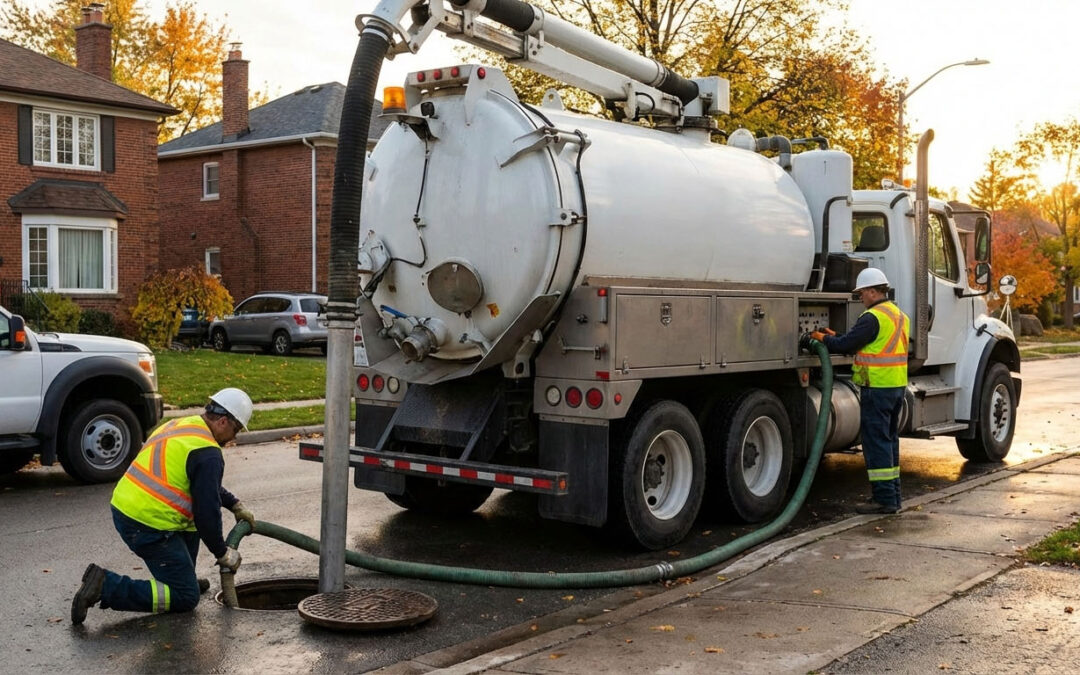
Sewer Line Backup Montreal: Warning Signs & Emergency Solutions
Few plumbing emergencies are as distressing—or potentially hazardous—as a sewer backup. When contaminated wastewater flows back into your home through drains, toilets, or basement floor drains, you face not just property damage but serious health risks from bacteria, viruses, and other pathogens . Unfortunately, sewer backups are increasingly common in Montreal due to aging infrastructure, tree root intrusions, and the city’s harsh freeze-thaw cycles that stress underground pipes .
The good news is that most sewer backups don’t happen without warning. Recognizing early signs like gurgling drains, slow drainage in multiple fixtures, and foul odors allows you to call for professional help before sewage floods your home . This comprehensive guide explains the warning signs every Montreal homeowner should know, what causes sewer line problems in our climate, emergency steps to take if backup occurs, and how professional sewer services can prevent and resolve these critical issues. For immediate sewer emergency help anywhere in Montreal, call 514-316-9154 24/7.
Understanding Sewer Backups: What Happens and Why
A sewer backup occurs when wastewater cannot flow properly from your home into the municipal sewer system . Instead of moving away from your property, sewage reverses direction and comes back through your plumbing—typically through the lowest drains like basement floor drains, ground-level showers, or toilets . This contaminated water contains human waste, toilet paper, bacteria, viruses, and potentially harmful chemicals .
Common Causes of Sewer Backups in Montreal
Montreal’s unique combination of aging infrastructure, mature tree-lined streets, and extreme weather creates perfect conditions for sewer line problems :
- Tree root intrusion: Montreal’s beautiful mature trees—especially in neighborhoods like Outremont, Westmount, and NDG—send roots seeking moisture straight into sewer lines through tiny cracks or joints. Once inside, roots create dense blockages that trap debris .
- Aging clay pipes: Many older Montreal homes still have original clay sewer laterals from the 1920s-1960s. These pipes crack, collapse, or separate at joints over time, creating blockages and collapse points .
- Grease and debris buildup: Cooking fats, oils, and food scraps poured down drains solidify in pipes, gradually narrowing the diameter until flow is restricted or blocked entirely .
- Freeze-thaw cycles: Montreal winters with temperatures dropping to -30°C followed by spring thaws cause ground movement that stresses underground pipes, creating cracks and misalignments .
- Heavy rainfall and spring runoff: Combined sewer systems in parts of Montreal can become overwhelmed during heavy rains or rapid snowmelt, forcing water back into homes through floor drains .
- Flushing inappropriate items: “Flushable” wipes, paper towels, feminine hygiene products, and other items don’t break down like toilet paper and create stubborn clogs .
The Two Types of Sewer Problems
Understanding whether your problem is in the private lateral line (your responsibility) or the public main (city responsibility) matters for both repairs and costs :
Private lateral line issues: These occur in the pipe running from your home to where it connects to the city main—typically at the property line. Blockages, root intrusions, or damage in this section are the homeowner’s responsibility to repair .
Public main line problems: When the municipal sewer main becomes blocked or overwhelmed, it can affect multiple properties. If your neighbors are also experiencing backups, the issue is likely in the city system. Contact your municipality immediately in these situations .
8 Critical Warning Signs of Sewer Backup
Most sewer backups provide advance warning—often days or weeks before catastrophic failure . Recognizing these signs early and calling for professional inspection can prevent thousands of dollars in damage and cleanup costs .
1. Multiple Fixtures Draining Slowly
When several plumbing fixtures throughout your home drain slowly at the same time, it signals a problem in your main sewer line rather than individual drain clogs . A single slow sink might just need plunging, but multiple slow drains—especially on different floors—indicate a developing blockage deep in the system .
2. Gurgling Sounds from Drains and Toilets
Gurgling, bubbling, or hissing noises coming from drains, toilets, or floor drains mean air is trapped in your sewer line, usually due to a partial blockage . You might hear these sounds when running water in one fixture causes bubbles or noises in another—like running the washing machine and hearing gurgling from the toilet . This is one of the most reliable early warning signs .
3. Water Backing Up in Basement Floor Drains
This is among the most critical warning signs . If water rises in your basement floor drain when you flush toilets, run the washing machine, or take showers upstairs, it means your main sewer line is struggling to handle normal flow . Even a small amount of water creeping upward signals dangerous pressure in the line .
4. Foul Sewage Odors
Persistent sewage smells—often described as rotten eggs mixed with human waste—coming from drains indicate wastewater gases aren’t venting properly through your plumbing system . If the smell gets stronger near certain drains or in the basement, the blockage is likely nearby . Normal plumbing should never emit sewage odors into your home .
5. Toilets Backing Up or Overflowing
While a single toilet backup might be a local clog, frequent toilet backups or water backing up into your toilet when you run other fixtures signals main line problems . Watch for water rising in the toilet bowl when you run the shower or washing machine—this cross-contamination is a classic sewer backup symptom .
6. Wet or Soggy Spots in Your Yard
Unexplained soggy areas, standing water, unusually green patches, or sunken spots in your lawn—especially near the sewer line path—indicate underground leaks or breaks . You might also notice sewage odors in these areas or even visible sewage pooling on the surface . This is particularly concerning as it means wastewater is escaping into your property.
7. Multiple Plumbing Fixtures Affected Simultaneously
If using one fixture causes problems in others—like flushing the toilet makes the shower gurgle, or running the dishwasher backs up the kitchen sink—your main sewer line is partially blocked . This interconnected behavior indicates the blockage affects the entire household drainage system .
8. Sewage Backing Up Through Lower-Level Fixtures
When sewage actually backs up through drains—appearing in bathtubs, showers, or floor drains—you have a sewer emergency requiring immediate professional attention . This contaminated water poses serious health risks and will cause extensive damage if not addressed immediately . Never wait or attempt DIY fixes once sewage is actively backing up .
Why Montreal Homes Are Particularly Vulnerable
Montreal’s infrastructure and climate create unique challenges for sewer systems that homeowners should understand .
Aging Infrastructure and Clay Pipes
Many Montreal neighborhoods, especially in central areas like Plateau-Mont-Royal, Rosemont, and Verdun, were developed between 1900-1970 using clay sewer pipes . While durable when new, these pipes become brittle with age, crack under freeze-thaw stress, and separate at joints. Montreal’s program to replace these lines continues, but thousands of homes still have original clay laterals prone to failure .
Mature Tree Canopy
Montreal’s iconic tree-lined streets—particularly maples, willows, and poplars—create beautiful neighborhoods but also problematic root systems . Tree roots naturally seek moisture and can detect sewer pipes from remarkable distances. They enter through tiny cracks or joints, then rapidly expand into dense mats that trap debris and completely block flow .
Extreme Freeze-Thaw Cycles
Montreal’s temperature swings from -30°C in winter to +30°C in summer create enormous stress on underground infrastructure . Ground freezes to significant depths, expands, then thaws and contracts. This movement causes pipes to shift, crack, or separate—especially at connection points. Spring is particularly problematic as sudden thaws send large volumes of water through stressed systems .
Combined Sewer Systems
Parts of Montreal still use combined sewer systems where stormwater and sanitary sewage share the same pipes . During heavy rains or rapid snowmelt, these systems can become overwhelmed, causing backups into homes through basement floor drains. While Montreal continues upgrading to separated systems, many areas remain vulnerable during storms .
Immediate Steps to Take During a Sewer Backup Emergency
If sewage is actively backing up into your home, quick action limits damage and health risks .
Step 1: Stop Using All Water Immediately
The moment you notice sewage backup, stop using all plumbing fixtures throughout your home . Don’t flush toilets, run faucets, use washing machines, or take showers. Every additional gallon you send into the system worsens the backup and increases the contaminated water entering your home .
Step 2: Shut Off Water if Possible
If safe to do so, shut off your main water supply to prevent accidental water use and ensure no additional pressure enters the sewer system . This is especially important if you have automatic appliances like dishwashers or washing machines that might activate on timers [attached_file:1].
Step 3: Keep People and Pets Away
Sewage water is classified as Category 3 “black water”—the most contaminated and hazardous classification . It contains bacteria like E. coli, viruses, parasites, and harmful chemicals. Keep family members and pets away from affected areas to prevent illness . Never allow children or pets to contact sewage-contaminated water or surfaces.
Step 4: Turn Off Electricity in Affected Areas
If sewage has reached areas with electrical outlets, appliances, or your electrical panel, turn off power to those circuits from your main breaker panel . Standing water and electricity create electrocution hazards. If you can’t safely reach your panel or if the panel itself is affected, evacuate and call emergency services.
Step 5: Document Everything for Insurance
Take photos and videos of the backup, damage to floors and walls, and affected belongings before cleanup begins . Document water levels, sewage locations, and property damage. Most homeowner insurance policies cover sudden sewage backups, but you’ll need thorough documentation to support claims .
Step 6: Call Emergency Sewer Services
Contact professional emergency plumbers immediately at 514-316-9154 for 24/7 sewer backup response throughout Montreal [attached_file:1]. Professional plumbers have specialized equipment to clear blockages, camera inspection systems to diagnose problems, and the protective gear necessary to work safely with sewage . Never attempt to clear sewer backups yourself—you need professional-grade equipment and expertise .
Professional Sewer Line Services and Solutions
Modern sewer line diagnosis and repair techniques are far more effective and less invasive than traditional methods .
Camera Inspection: Seeing the Problem
High-definition sewer camera inspection is the first step in properly diagnosing sewer line problems . A waterproof camera travels through your sewer line, providing real-time video that shows exactly what’s causing the backup—whether tree roots, collapsed sections, grease buildup, or foreign objects . This eliminates guesswork and ensures the right solution is applied .
Montreal Plumbing offers professional drain camera inspection services that provide clear video documentation of your sewer line condition [attached_file:1]. You receive a copy of the inspection video showing problem areas and recommended solutions.
Hydro-Jetting: Powerful Cleaning
For blockages from grease, debris, or even moderate root intrusions, hydro-jetting provides the most thorough cleaning available . High-pressure water (3,000-4,000 PSI) scours pipe walls completely clean, removing decades of buildup and cutting through roots . Unlike mechanical augers that just poke holes through clogs, hydro-jetting restores pipes to nearly original capacity.
Our hydro-jetting services effectively clear even the toughest sewer blockages without damaging pipes [attached_file:1]. This method is particularly effective for Montreal’s common problems—grease accumulation and root infiltration.
Root Removal and Treatment
When tree roots have invaded your sewer line, specialized cutting equipment removes the growth without harming pipes . Mechanical root cutters or hydro-jetting with root-cutting nozzles clear the line, while optional root treatment chemicals discourage regrowth . For severe root problems, pipe relining or replacement may be necessary.
Pipe Repair and Replacement Options
If camera inspection reveals collapsed sections, severe cracks, or extensively damaged pipes, repair or replacement becomes necessary :
- Traditional excavation: Digging up and replacing damaged sections—necessary for collapsed pipes or extensive damage
- Pipe relining (trenchless): Installing a new pipe lining inside the existing pipe without excavation, ideal for pipes with structural integrity but cracks or root entry points
- Pipe bursting (trenchless): Pulling new pipe through while breaking up the old pipe—replaces entire lines with minimal digging
Montreal Plumbing provides comprehensive sewer line repair and replacement services using modern techniques that minimize property disruption [attached_file:1].
Preventing Future Sewer Backups
Proactive maintenance and smart habits dramatically reduce sewer backup risk .
Schedule Regular Camera Inspections
Annual or bi-annual camera inspections of your main sewer line identify developing problems before they cause backups . If you have mature trees near your sewer line, live in an older home, or have experienced backups before, regular inspections are essential preventive maintenance .
Install a Backwater Valve
A backwater valve (also called backflow preventer) installs in your basement floor drain or main sewer line and automatically closes when water tries to flow backward . This prevents city sewer surges or combined system overflows from backing into your home. Montreal building codes require these valves in many new construction projects, and they can be retrofitted into existing homes.
Be Mindful of What Goes Down Drains
Preventing clogs starts with proper disposal habits :
- Never pour grease down drains: Collect in containers and dispose in trash once solidified
- Flush only waste and toilet paper: No wipes (even “flushable” ones), paper towels, feminine products, or cotton swabs
- Use drain strainers: Catch hair and debris before they enter pipes
- Run cold water when using garbage disposal: Helps solidify oils so they’re chopped and flushed rather than coating pipes
- Compost or trash food scraps: Garbage disposal should be used sparingly, not as primary food waste disposal
Maintain Trees Responsibly
If you have large trees near your sewer line, consider root barriers, regular root pruning by arborists, or choosing species with less aggressive root systems for new plantings . While removing mature trees isn’t always necessary, proactive root management prevents invasions.
Schedule Preventive Drain Cleaning
Annual professional drain cleaning removes buildup before it causes blockages [attached_file:1]. This is particularly important for homes with older pipes, large households, or history of slow drains. Preventive maintenance costs far less than emergency backup cleanup.
Sewer Backup Cleanup: Professional vs. DIY
Once a sewer backup occurs, proper cleanup is critical for health and safety .
Why Professional Cleanup Is Recommended
Sewage contains dangerous pathogens that require specialized cleaning, disinfection, and disposal methods . Professional restoration companies have protective equipment, hospital-grade disinfectants, and experience handling contaminated materials safely. They also document damage thoroughly for insurance claims .
Professional cleanup typically includes removing standing water and sewage, disposing of contaminated materials safely, thoroughly disinfecting all affected surfaces, drying structures to prevent mold, and testing to ensure safety .
If You Must Clean Minor Backups Yourself
For very small backups caught immediately—like a small amount of water from a basement drain—homeowners can clean carefully with proper precautions :
- Wear rubber boots, gloves, and eye protection
- Remove standing water with mops and buckets (never use vacuum cleaners on sewage water)
- Dispose of contaminated absorbent materials in sealed plastic bags
- Clean all surfaces with hot water and detergent, then disinfect with bleach solution (1 cup bleach per gallon of water)
- Dry thoroughly using fans and dehumidifiers
- Wash all clothing and protective equipment in hot water separately from other laundry
However, if sewage has soaked into drywall, insulation, or wooden structures, professional cleanup is necessary—these materials cannot be adequately disinfected and require removal .
Understanding Sewer Service Costs in Montreal
Sewer line services vary widely in cost depending on the problem and solution required .
Typical Service Pricing
Based on Montreal market rates:
- Camera inspection: $200-$400
- Emergency drain cleaning/hydro-jetting: $350-$800
- Root removal: $400-$900
- Minor pipe repair: $500-$2,000
- Sewer line replacement (traditional): $3,000-$15,000+
- Trenchless pipe relining: $4,000-$12,000
- Backwater valve installation: $850-$2,500
While these costs may seem high, they’re far less than the $10,000-$30,000 average cost of sewage backup cleanup and restoration . Preventive maintenance and early intervention save significant money long-term.
Insurance Coverage Considerations
Most standard homeowner insurance policies include some sewage backup coverage, but limits are often low ($5,000-$10,000) . Consider purchasing additional sewer backup insurance riders if you live in a high-risk area. Insurance typically covers cleanup and restoration but not the actual sewer line repair—that’s the homeowner’s expense .
Frequently Asked Questions About Sewer Backups
How quickly do I need to act when I see warning signs?
As soon as you notice warning signs like gurgling drains or slow drainage in multiple fixtures, call for professional inspection . Early intervention often means a $300-$600 cleaning job instead of a $10,000+ emergency backup and cleanup. Don’t wait for sewage to actually back up—by then, significant damage may already be occurring.
Can I prevent sewer backups during heavy rainstorms?
If your area has combined sewers prone to storm backups, install a backwater valve that automatically closes when water tries to flow backward . During severe storms, minimize water use (delay laundry and showers) to reduce the load on the system. If you know storms cause backups in your area, consider having your line professionally inspected and cleaned before rainy season.
Are chemical drain cleaners safe for sewer lines?
No—avoid chemical drain cleaners for sewer issues . They’re ineffective on main line clogs, can damage aging pipes (especially cast iron and clay), create hazardous conditions for plumbers who must work in the line afterward, and don’t address root causes. Professional hydro-jetting or mechanical clearing is always the better solution .
How do I know if the problem is my lateral or the city main?
Check with neighbors—if multiple homes on your street have simultaneous backups, it’s likely the city main . If only your home is affected, it’s almost certainly your lateral line. Your municipality can often tell you if there are known issues with the main line in your area. Regardless, call a plumber first—they can assess and contact the city if needed.
What’s the difference between a drain clog and a sewer backup?
A drain clog affects a single fixture or branch line—like a clogged kitchen sink or bathroom tub . A sewer backup affects your main line, causing problems throughout your plumbing system, often with sewage coming back through multiple lower-level drains . Sewer backups are far more serious and require immediate professional attention.
Can tree roots really break through sewer pipes?
Roots don’t typically break healthy pipes, but they can enter through tiny existing cracks or loose joints . Once inside, they expand rapidly into dense mats that can exert tremendous pressure and eventually split pipes. Mature trees like willows, maples, and poplars are particularly aggressive. Regular camera inspections detect root intrusion before it causes failures .
Is sewage backup covered by homeowner insurance?
Standard policies often include some coverage but with low limits ($5,000-$10,000 typically) . Review your policy and consider additional sewage backup riders if you’re in a high-risk area (older home, mature trees, combined sewer system). Coverage typically pays for cleanup and restoration but not the sewer line repair itself .
Get Professional Sewer Service in Montreal
Don’t wait for sewage to flood your home before addressing sewer line problems. If you’ve noticed any warning signs—gurgling drains, slow drainage, foul odors, or water backing up—call Montreal Plumbing for professional assessment and solutions [attached_file:1]. Our CMMTQ-certified plumbers (RBQ: 5798-6812-01) provide comprehensive sewer services including camera inspection, hydro-jetting, root removal, and line repair or replacement.
We’re available 24/7 for sewer emergencies throughout Montreal, Laval, and surrounding areas. Call 514-316-9154 now for immediate assistance or to schedule preventive inspection and maintenance.
🚨 Emergency Sewer Backup Service 24/7
Sewage backing up into your home? Multiple drains clogged? Foul odors from drains? We respond immediately to sewer emergencies with professional equipment and expertise.
Call Now: 514-316-9154
Protect Your Home from Sewer Disasters
Regular inspection and maintenance prevent costly sewer backups. Don’t wait for an emergency—schedule preventive service today and enjoy peace of mind.
📞 Call: 514-316-9154
📧 Email: Contact Us Online
Serving all Montreal neighborhoods including Plateau-Mont-Royal, Rosemont, Westmount, Outremont, NDG, Verdun, Ville-Marie, Downtown, and all surrounding areas.
Note: All prices mentioned in this article are provided for general reference and informational purposes only. These prices are not fixed and may vary depending on facts, market conditions, location, time, availability, or other relevant factors. Actual prices may change without prior notice. Readers are advised to verify details independently before making any decisions.