
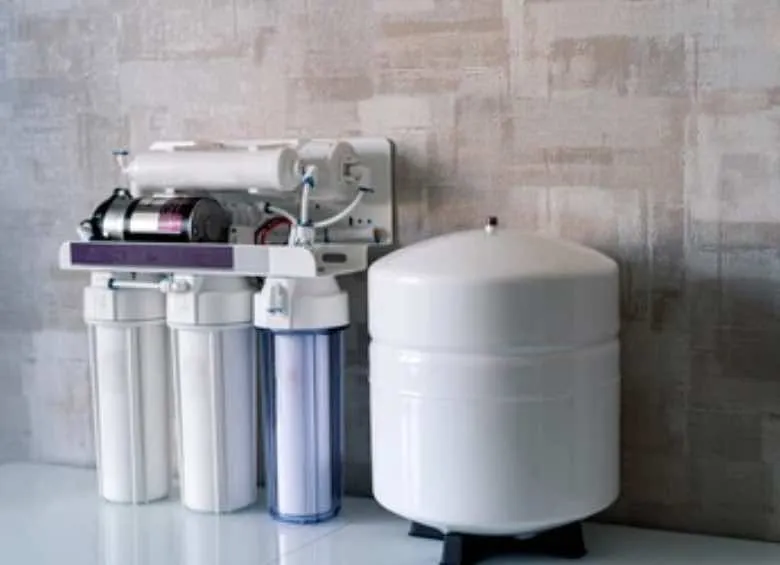
Reverse Osmosis vs Water Softener: Which Does Your Montreal Home Need?
⚡ Quick Answer
A reverse osmosis (RO) system filters contaminants like lead, chlorine, and microplastics from your drinking water. A water softener removes hardness minerals (calcium and magnesium) that cause limescale throughout your entire home. They solve completely different problems — and most Montreal homes benefit from both.
💡 RO system: $300 – $1,200 installed | Water softener: $800 – $2,500 installed | Both together: $1,200 – $3,500
If you’re shopping for water treatment services in Montreal, you’ve probably noticed the two most recommended systems are reverse osmosis and water softeners. They sound like they do the same thing — make your water better — but they actually work in completely different ways and target entirely different problems.
Montreal’s water comes from the St. Lawrence River and is moderately hard at ~116 PPM (6.7 grains per gallon). It also contains residual chlorine from municipal treatment and, in some older neighbourhoods, traces of lead from aging service lines. Choosing between a reverse osmosis vs water softener — or installing both — depends on exactly which of these problems affect your home.
This comparison guide breaks down how each system works, what it costs, what it removes (and doesn’t), and gives you a clear decision framework. Whether you need water purification services, water softener installation, or both — you’ll know exactly what to ask your plumber by the end of this article.
How Each System Works: The Fundamental Difference
Before comparing features and costs, it’s critical to understand the core technology behind each system — because this determines what problems they can and cannot solve.
Filtration System
🔬 Reverse Osmosis
Pushes water through a semi-permeable membrane at high pressure. Water molecules pass through; contaminants are trapped and flushed down the drain.
Technology: Membrane filtration (0.0001 micron)
Removes: Lead, chlorine, fluoride, microplastics, sodium, VOCs, arsenic, nitrates, heavy metals
Doesn’t Remove: Hardness minerals at whole-home scale
Coverage: Single tap (point-of-use)
Result: Pure, clean-tasting drinking water
Conditioning System
💧 Water Softener
Uses ion exchange resin to swap calcium and magnesium ions (hardness) for sodium or potassium ions. Water passes through a resin tank; the brine tank regenerates the resin periodically.
Technology: Ion exchange
Removes: Calcium, magnesium, some dissolved iron
Doesn’t Remove: Lead, chlorine, bacteria, chemicals, microplastics
Coverage: Whole home (point-of-entry)
Result: Scale-free pipes, softer skin/hair, longer appliance life
💡 Think of it this way: A water softener is like a bodyguard for your plumbing — it protects pipes, appliances, and fixtures from mineral damage. Reverse osmosis is like a purifier for your glass — it makes the water you drink and cook with as clean as possible. They protect different things in different ways.
Head-to-Head Comparison: Reverse Osmosis vs Water Softener
What Montreal’s Water Actually Needs: A Local Perspective
Montreal isn’t Phoenix or rural Ontario — our water profile is unique, and that changes the calculus on which system matters more. Here’s what the city’s water data tells us:
Based on data from the Ville de Montréal’s drinking water reports, the city’s water is moderately hard — not extremely hard like some Ontario municipalities. A water softener will make a noticeable difference in limescale buildup and appliance life, but it won’t address the chlorine taste or potential lead exposure that an RO system handles. For the most complete protection, many of our Montreal clients install both systems working in tandem.
Which System Do You Need? Use This Decision Guide
Answer these questions about your Montreal home to determine the right choice:
🔬 You Need a Reverse Osmosis System If…
→ Your home was built before 1970 (lead service line risk)
→ You want chlorine-free, pure-tasting drinking water
→ You live in a condo and can’t install whole-home equipment
→ You’re concerned about microplastics, VOCs, or heavy metals
→ You currently buy bottled water for drinking and cooking
💧 You Need a Water Softener If…
→ You see white limescale buildup on faucets and showerheads
→ Your glasses come out of the dishwasher cloudy or spotted
→ Your skin and hair feel dry after showering
→ Your water heater is losing efficiency or making popping sounds
→ You own a detached house and want whole-home treatment
🏆 You Need Both If…
→ You want comprehensive protection for your entire Montreal home
→ You notice both limescale buildup and a chlorine taste in water
→ You have a family and want the safest possible drinking water
→ You want to extend the lifespan of your RO membrane (a softener protects it from scale)
→ You’re renovating and want to invest in long-term water quality
Why RO + Softener Together Is the Best Montreal Setup
When a water softener and reverse osmosis system are installed together, each one covers the other’s blind spots — and they actually make each other work better. Here’s why this combination is the gold standard for water treatment services in Montreal:
Softener Extends RO Membrane Life
Hard water causes mineral buildup on the delicate RO membrane, reducing efficiency and forcing earlier replacement. Pre-softened water keeps the membrane clean, potentially doubling its lifespan from 2–3 years to 5+ years.
RO Removes the Sodium Softeners Add
Water softeners exchange calcium for sodium — which means softened water has slightly elevated sodium levels. The RO system removes up to 98% of that added sodium from your drinking water, giving you the best of both worlds.
Total Home Coverage
The softener handles every drop of water entering your home — protecting tankless water heaters, shower fixtures, and pipes from scale. The RO system focuses on your kitchen tap, delivering pristine water for drinking and cooking.
Lower Long-Term Costs
Soft water means fewer water heater repairs, less detergent use, and fewer faucet replacements due to mineral corrosion. Combined with zero bottled water purchases, the dual system typically pays for itself within 3–4 years.
Full Cost Comparison: RO vs Softener vs Both (Montreal 2026)
Installing both systems during a single plumber visit saves on labour costs. Most Montreal plumbers — including our team — offer bundled pricing for water filtration systems installation that’s 15–20% less than booking each installation separately.
Need Help Choosing? We’ll Test Your Water For Free
Our licensed plumber tests hardness, TDS, chlorine & lead — then recommends only what you actually need.
How RO and Softener Installation Works in Montreal
Here’s what a professional water filtration systems installation looks like for each system — and what to expect when you install both on the same day:
🔬 Reverse Osmosis Installation (1–2 Hours)
→ Plumber installs the system under your kitchen sink, connecting to the cold water line
→ A dedicated RO faucet is mounted on the countertop or sink deck
→ Drain saddle connects to the sink drain for waste water
→ Storage tank is positioned under the cabinet
→ System is flushed for 20–30 minutes before first use
💧 Water Softener Installation (2–4 Hours)
→ Softener is placed near the main water entry point (typically basement)
→ Plumber installs bypass valve and connects to the main water line
→ Drain line is connected to a floor drain or drain system for regeneration cycles
→ Brine tank is filled with salt and system is programmed for hardness level
→ All connections are pressure-tested for leaks
⚠️ Important: When installing both systems, the water softener must always be installed before the RO system in the water flow path. This ensures softened water reaches the RO membrane, protecting it from mineral buildup. A CMMTQ-licensed plumber ensures proper sequencing and Quebec code compliance.
Maintenance: Reverse Osmosis vs Water Softener
According to Health Canada’s drinking water guidelines, the recommended aesthetic objective for hardness is 80–100 mg/L — meaning Montreal’s water at 116 PPM technically exceeds that threshold. Both systems require regular upkeep to perform at their best. Here’s a side-by-side maintenance comparison so you know exactly what to expect:
🔬 RO Maintenance
✅ Replace sediment pre-filter — every 6 months
✅ Replace carbon filter — every 6–12 months
✅ Replace RO membrane — every 2–3 years
✅ Sanitize tank — during filter changes
✅ Check TDS levels — monthly (with $15 meter)
Annual cost: $50 – $120
💧 Softener Maintenance
✅ Refill salt — every 6–8 weeks
✅ Check for salt bridges — monthly
✅ Clean brine tank — once per year
✅ Replace resin — every 8–10 years
✅ Professional inspection — annually
Annual cost: $80 – $200 (including salt)
A yearly plumbing maintenance visit can cover both systems in a single appointment — your plumber checks filter condition, tests water quality, inspects for leaks, and verifies that both units are performing optimally.
5 Common Myths About RO Systems and Water Softeners
There’s a lot of misinformation online about water treatment. Let’s set the record straight on the myths we hear most often from Montreal homeowners:
❌ Myth #1: “A water softener makes water safe to drink.”
✅ Reality: Softeners only remove hardness minerals. They don’t filter out chlorine, lead, bacteria, or chemical contaminants. For safe, pure drinking water, you need an RO or carbon filtration system.
❌ Myth #2: “Reverse osmosis softens your water.”
✅ Reality: While RO membranes do remove some calcium and magnesium from the water passing through them, they only treat one tap. Your showers, appliances, and pipes still receive hard water.
❌ Myth #3: “Softened water tastes salty.”
✅ Reality: Properly functioning softeners add very small amounts of sodium — typically 12–30 mg/L per grain of hardness removed. That’s less sodium than a slice of bread. Most people can’t taste the difference.
❌ Myth #4: “RO systems waste too much water.”
✅ Reality: Older models wasted 3–6 gallons per gallon filtered. Modern high-efficiency RO systems achieve a 1:1 ratio or better. With a permeate pump, waste drops even further.
❌ Myth #5: “You can DIY both installations.”
✅ Reality: While a basic under-sink filter can be DIY’d, water softeners connect to your main water line and require proper drainage, backflow prevention, and Quebec code compliance. DIY installation voids most warranties and risks water damage.
Why Hire a Licensed Montreal Plumber for Water Treatment
Whether you choose an RO system, a water softener, or both, professional installation from a CMMTQ-certified plumber is essential for these reasons:
🔧 Accurate Water Testing: A plumber tests hardness, TDS, pH, chlorine, and lead levels to recommend the exact right system — not an upsell. Results determine whether you need one system or both.
🔧 Correct System Sizing: An undersized softener regenerates too often (wasting salt and water). An oversized one costs more than necessary. A plumber calculates your household’s flow rate and hardness to match the right capacity.
🔧 Code-Compliant Installation: Quebec plumbing code requires specific drainage connections, backflow prevention, and electrical standards for water treatment equipment. Only a licensed professional can guarantee compliance.
🔧 Warranty Protection: Major manufacturers — Pentair, Kinetico, Culligan, Fleck — require proof of professional installation for warranty claims. A DIY install can void thousands of dollars in coverage.
🔧 System Integration: If you already have a water heater, appliance water lines, or existing filtration equipment, your plumber ensures everything connects properly without pressure drops or cross-contamination.
Frequently Asked Questions: RO vs Water Softener
Does a reverse osmosis system replace a water softener?
No. A reverse osmosis system only filters water at one tap and cannot prevent limescale throughout your home. A water softener treats all water entering your house. They solve different problems and work best when installed together.
Is Montreal water hard enough to need a softener?
Montreal water measures approximately 116 PPM (6.7 GPG), which is classified as moderately hard. While not as extreme as some regions, this level is enough to cause noticeable limescale on fixtures, cloudy glassware, and reduced water heater efficiency over time.
Can I install a water softener in my Montreal condo?
Most condos do not allow water softener installation because it connects to the main water line and requires a drain for regeneration. However, an under-sink reverse osmosis system is ideal for condos — it’s compact, only needs a cold water connection, and doesn’t modify common plumbing.
Does softened water taste salty?
No. A properly functioning water softener adds approximately 12–30 mg of sodium per litre per grain of hardness removed. This is imperceptible to most people. If you’re on a sodium-restricted diet, you can use a potassium-based softener salt instead, or pair the softener with an RO system that removes the added sodium.
How much does it cost to install both systems in Montreal?
Installing a water softener and reverse osmosis system together in Montreal typically costs $1,200 – $3,500, including equipment and professional installation. Bundling both installations during a single plumber visit saves 15–20% on labour compared to scheduling them separately.
Which system should be installed first — softener or RO?
The water softener should always be installed upstream (before) the reverse osmosis system. This way, the softener pre-treats water entering the RO unit, which protects the delicate RO membrane from mineral scaling and can double its lifespan.
Will a water softener remove chlorine taste from Montreal water?
No. Standard water softeners do not remove chlorine. To eliminate chlorine taste and odour, you need a carbon filter or reverse osmosis system. Some premium softener models include a built-in carbon filtration stage, but a dedicated filtration system is more effective.
How long does a combined RO + softener installation take?
A combined installation typically takes 3–5 hours when performed by a licensed plumber. The softener installation (2–4 hours) is done first, followed by the under-sink RO system (1–2 hours). Both are usually completed in a single visit.
Does reverse osmosis waste a lot of water?
Modern high-efficiency RO systems have significantly reduced waste compared to older models. Current systems with permeate pumps achieve a 1:1 filtered-to-waste ratio or better. For a typical Montreal household using RO for drinking and cooking, total waste amounts to roughly 1–3 extra litres per day.
Do I need a permit to install a water softener or RO system in Montreal?
Montreal does not typically require a permit for residential water softener or reverse osmosis installation. However, all work must be done by a CMMTQ-licensed plumber to comply with Quebec plumbing code. If your installation involves modifications to the main water line, your plumber will advise if any permits are needed.
Get the Right Water Treatment for Your Montreal Home
Licensed plumbers • Free water testing • RO & softener installation
Serving all of Montreal — Downtown, West Island, East End, Laval, South Shore